‘Nature is just eroding away very slowly’: Reuters visually illustrates sharp decline in global insect populations

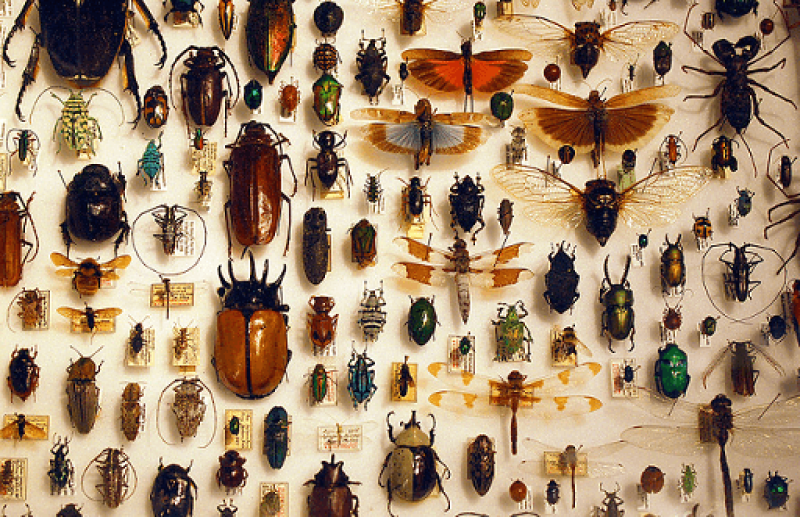
Backboned animals, particularly charismatic mammals, tend to attract more research funding than insects. A European research project looking at a vertebrate species, for example, receives nearly 500 times more funding on average than an invertebrate study. Credit: Barta IV

As human activities rapidly transform the planet, the global insect population is declining at an unprecedented rate of up to 2% per year. Amid deforestation, pesticide use, artificial light pollution and climate change, these critters are struggling — along with the crops, flowers and other animals that rely on them to survive.

Follow the latest news and policy debates on sustainable agriculture, biomedicine, and other ‘disruptive’ innovations. Subscribe to our newsletter.

The world has lost 5% to 10% of all insect species in the last 150 years — or between 250,000 and 500,000 species, according to a February 2020 study in the journal Biological Conservation. Those losses are continuing, though estimates vary due to patchy data as well as uncertainty over how many insects exist.

The demise of insects can’t be attributed to any single cause. Populations are facing simultaneous threats, from habitat loss and industrial farming to climate change. Nitrogen overloading from sewage and fertilizers has turned wetlands into dead zones; artificial light is flooding out nighttime skies; and the growth of urban areas has led to concrete sprawl.


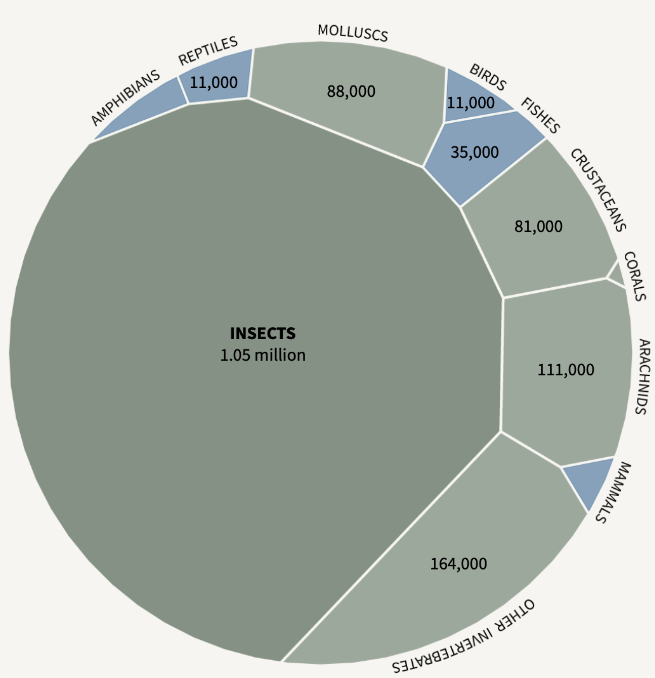
Insects significantly outnumber all other animals on Earth. Credit: Catherine Tai

“Nature is just eroding away very slowly,” [Entomologist David] Wagner said. As insects disappear, “we’re losing the limbs and the twigs of the tree of life. We’re tearing it apart. And we’re leaving behind a very simplified and ugly tree.”


This is an excerpt. Read the original post here

{{ reviewsTotal }}{{ options.labels.singularReviewCountLabel }}
{{ reviewsTotal }}{{ options.labels.pluralReviewCountLabel }}
{{ options.labels.newReviewButton }}
{{ userData.canReview.message }}

Related Articles

Infographic: Global regulatory and health research agencies on whether glyphosate causes cancer

Infographic: Global regulatory and health research agencies on whether glyphosate causes cancer

Does glyphosate—the world's most heavily-used herbicide—pose serious harm to humans? Is it carcinogenic? Those issues are of both legal and ...

Most Popular

Screenshot-PM-24
Viewpoint: The herbicide glyphosate isn’t perfect. Banning it would be far worse.
79d03212-2508-45d0-b427-8e9743ff6432
Viewpoint: The Casey Means hustle—Wellness woo opportunism dressed up as medical wisdom
d-b
Blocked arteries, kidney stones, nausea, constipation, fatigue: Long list of health problems caused by too much vitamin D 
ChatGPT-Image-Mar-10-2026-01_39_01-PM
Viewpoint—“Miracle molecule” debunked: Why acemannan supplements don’t work
Screenshot-2026-04-30-at-11.33.46-AM
Anti-seed-oil to anti-vax pipeline: MAHA movement spreads to teen influencers
lab grown meat research kelly schultz lehighuniversity main
Profiles of the 10 top global cultured meat companies
ChatGPT-Image-Apr-30-2026-05_00_48-PM
Wellness grifter physician turned wellness influencer out as surgeon general nominee
ChatGPT-Image-Apr-30-2026-12_21_05-PM-2
The tech billionaires behind the immortality movement
Screenshot-2026-04-28-at-1.21.37-PM
How America’s medical system encourages psychiatric overdiagnosis

Sorry. No data so far.

glp menu logo outlined

Get news on human & agricultural genetics and biotechnology delivered to your inbox.